Cameras Are Great, Aren't They?
A story about giving in to the recurring, roughly yearly urge to buy a camera.
A while ago I said something like I can't buy the things I want, but I started a part-time job, got to do what I wanted a bit, and slowly saved up some money.
So, I'm thinking of buying a camera.
What? Aren't you going to buy a VR headset? I can't say something like “my workplace has BigScreen and nothing else will feel like VR anymore, so I won't buy one for now” but I can't say that — though I have sold one in the past, so maybe a camera first.
My budget is within 150,000 yen. By "camera" I don't mean phone-level stuff — I want something that gives a nice background blur, satisfies some ownership desire, and won't prevent me from taking the photos I want because of performance limitations.
Cameras I've owned in the past
First, before buying something new, let's look back.
IXY 130
In 2014, when I was starting to develop strong interests and curiosities about various things, my parents bought me one as a birthday/Christmas present (my birthday is Dec 15 so presents often get "merged"). It cost 12,000 yen. A 12,000-yen camera for an eight-year-old isn't cheap.
Simple operation, limited features, but unlike toy kids' cameras it actually takes proper photos and even has optical zoom. It's a compact camera — image quality is below today's smartphone cameras, but it's an important memory.

The first photo I took that I could actually show people was from a spring break trip to Hokkaido in third grade. It reminds me of the excitement of being on a plane. Back then my parents took us using JAL award tickets, so flying felt comfortable and thrilling — totally different from the current experience of sitting six hours on an AirAsia (an international LCC in Southeast Asia) and slowly losing feeling in your butt.
I didn't carry a smartphone like people do nowadays, and this was basically the only way I deliberately recorded images and other media.
PowerShot SX720 HS
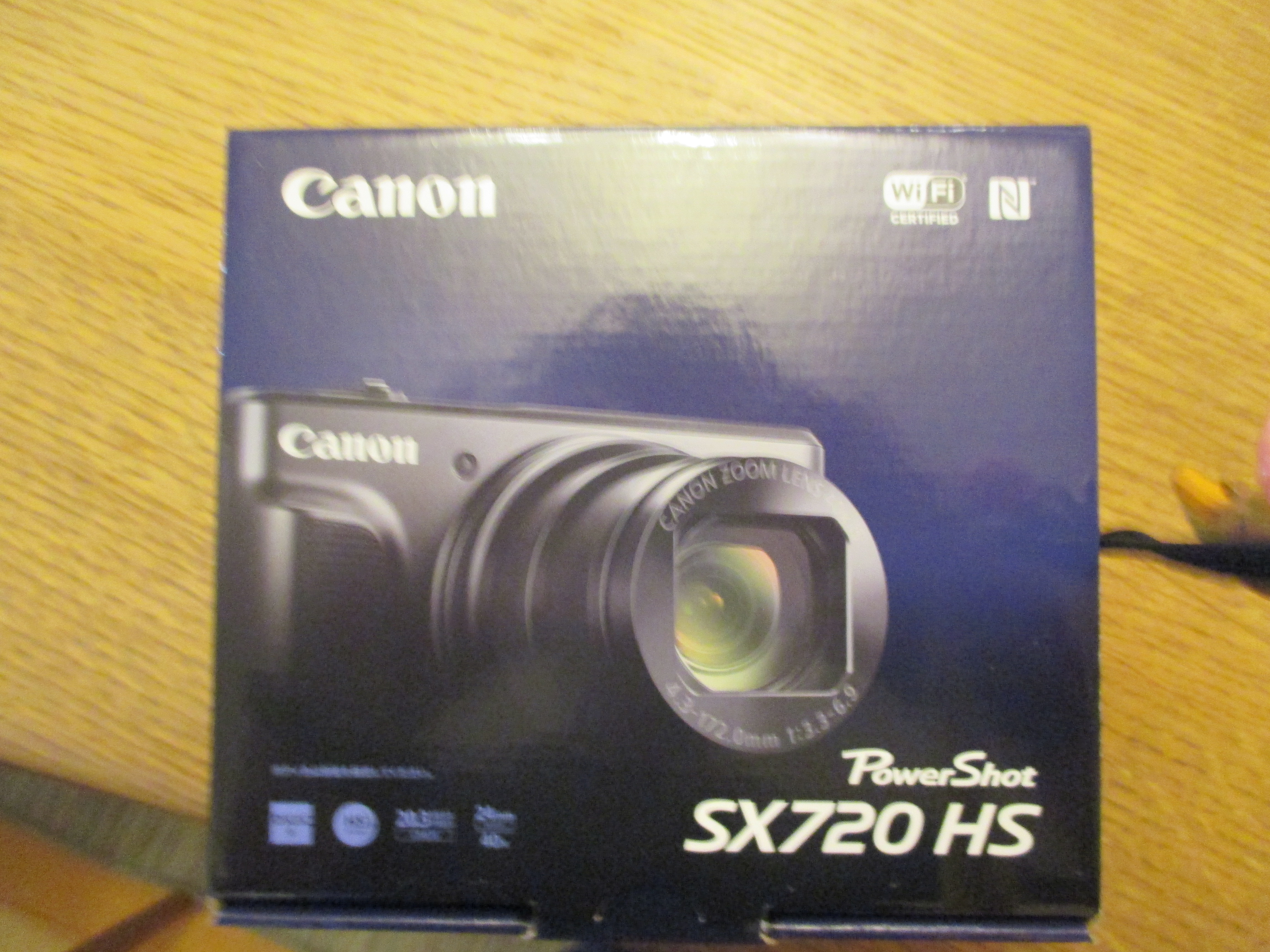
Then in 2019. After five years I had learned more and started to feel the camera's performance was lacking. Again it was a combined Christmas/birthday present from my parents. It cost 36,000 yen. I'm really amazed my parents bought such an expensive camera for a middle schooler (I didn't know much then about how hard it is to earn money).

The image quality improved and I might have developed an interest in train photography. An E217 series train that really evokes an era. This track no longer runs. Telephoto is great.
I remember once submerging this camera in water and sending it for repair.
But I didn't use it as much as the IXY130.
When I became a middle schooler my parents bought me a smartphone and that covered most needs. The first smartphone I got was an iPhone 7 (that kind of "free with carrier" model), and I was amazed by its performance. Even though the compact camera cost over 30,000 yen, thinking back it was roughly entry-level. Smartphone cameras, which were getting stronger, were becoming competitive.
It didn't have background blur at all, and to be honest, the parts where it "won" were... but this camera had an amazing feature: a palm-sized body with 40x optical zoom, and that was incredibly useful.
After that I started using phones like a POCO X3 and a Google Pixel 6 with multiple cameras, and I gradually stopped using dedicated cameras much.
Nikon D40
While using smartphones I began to feel that background blur significantly changes the impression of a photo, and I wanted to find a way to produce that. Smartphone AI processing and portrait modes detect subjects and artificially create blur, but it still feels quite different from optical blur.
From a closet at home I found a dust-covered DSLR, a Nikon D40 — something my parents had used long ago.
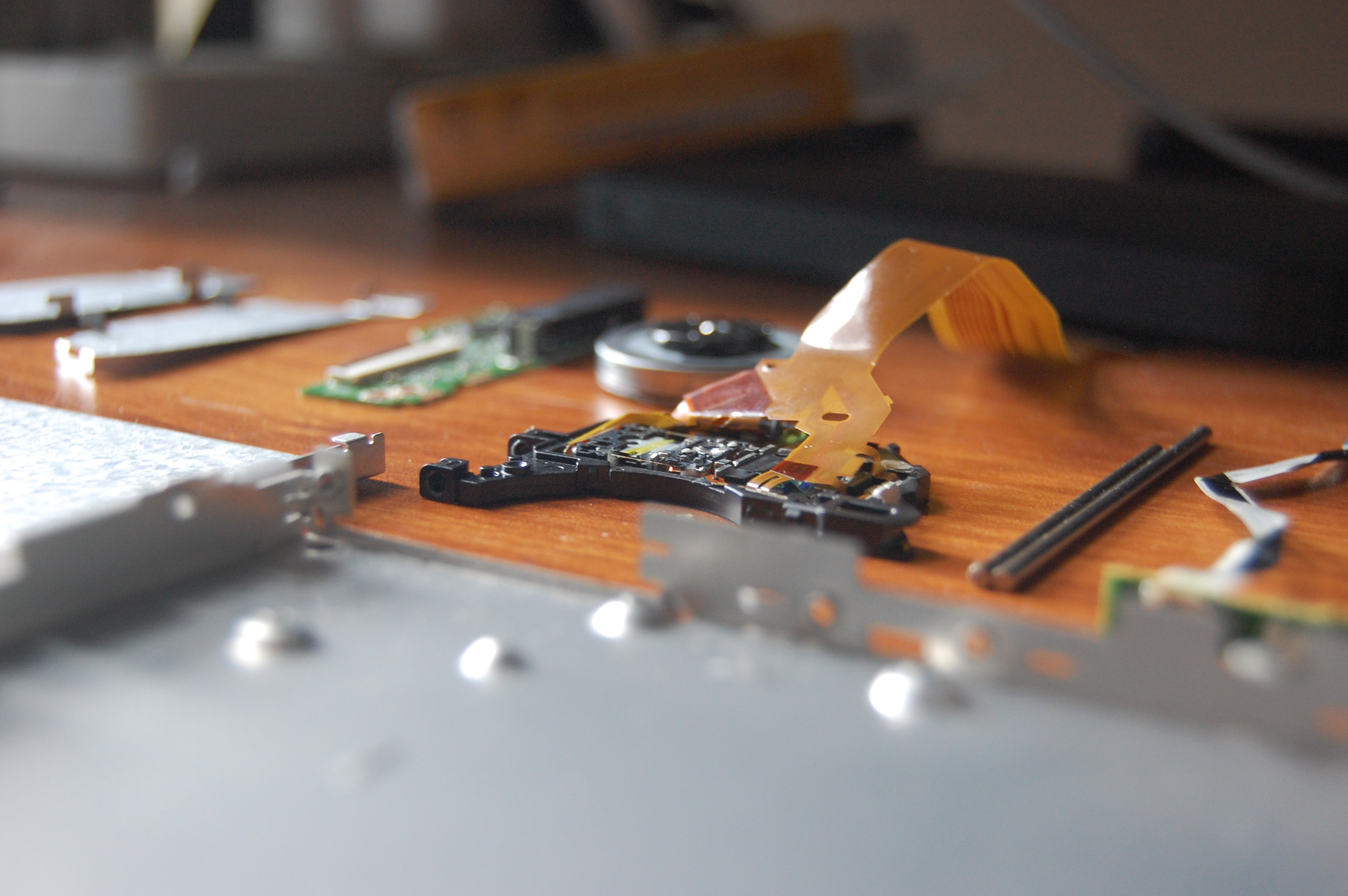
This is from when I inexplicably disassembled a DVD drive. Optical background blur is really nice.
It was in very good condition and all functions worked perfectly. I used it fairly often to shoot small objects. Due to the sensor characteristics, the color tones were somewhat film-like — what people call "emo" photos (I lack vocabulary). AF exists but it's essentially manual, and it's weak in low light; noise is intense. I didn't take it out of the house a lot. Tweaking settings, holding your hands steady, watching light, and pressing the shutter can be fun in its own way.
Osmo Pocket 3
Maybe I only started to think seriously about "cameras" in 2024.
I was satisfied with smartphone cameras, but during my time at Mitou Junior I filmed myself and things I made to share with the world, and I started to feel some limits with a phone camera. After about 30 minutes of recording, a phone would stop capturing.
So I used Mitou Junior's budget to buy an Osmo Pocket 3. At the time I was doing presentations and live streaming, and this camera was helpful. It's still very useful and I carry it everywhere, so the body has even cracked 😱
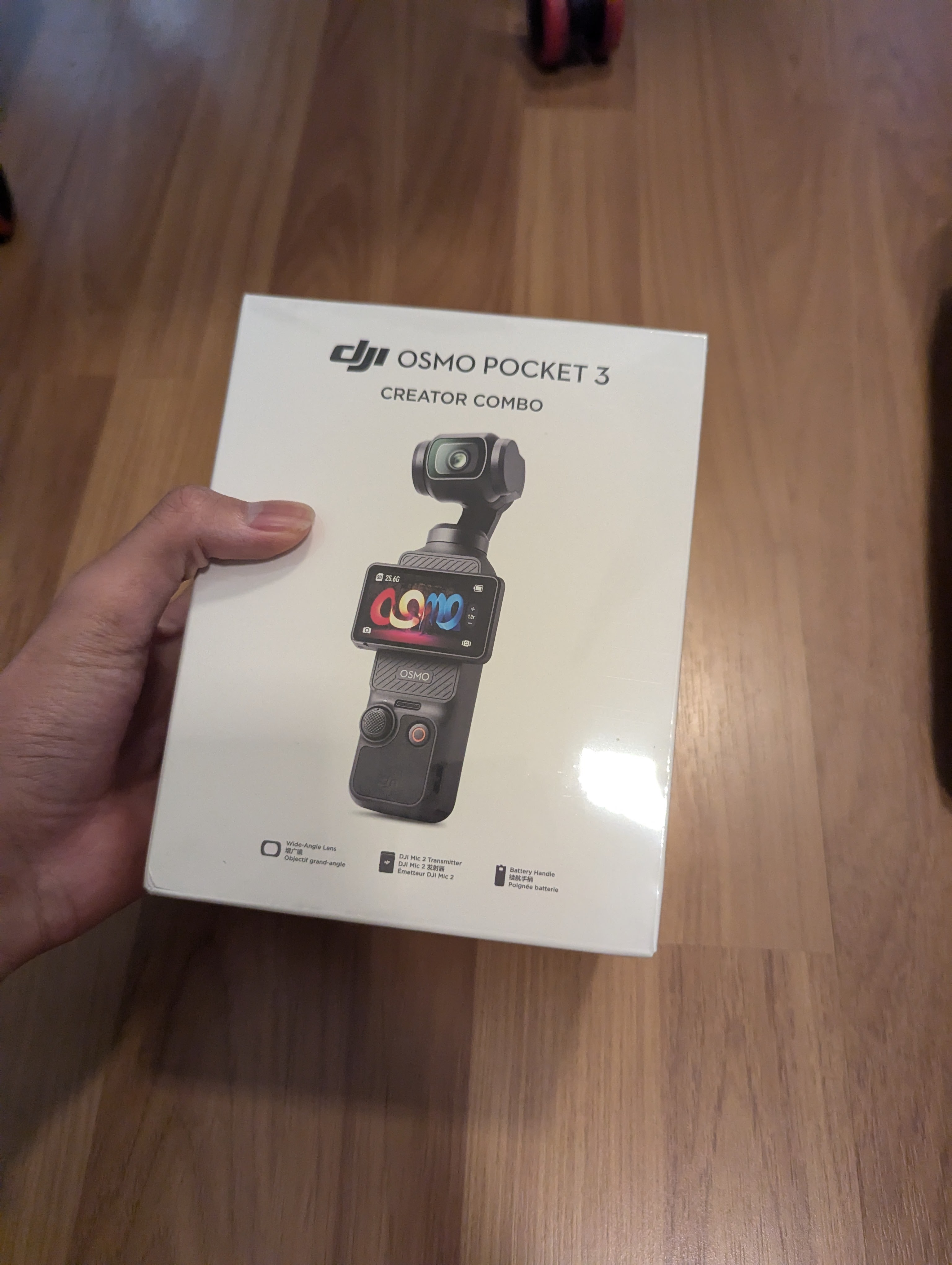
This camera is really easy to use and small, so it's often in my bag. The UX is just too good. You can't do very fine settings, but you can quickly shoot video. For stills, in some cases it might even be better than a phone camera. Of course it has no wide-angle or telephoto (there are attachments for wide), and there's none of the crazy AI processing that recent Pixels have that can make nonexistent objects appear.
Pixel 9 Pro
It might have been with the Pixel 9 that I felt smartphones had reached the point where you can shoot most things with them.
It was the first phone I bought with my own money after graduating high school.
The Pixel 9 Pro is very capable and I really like its HDR feature. The brightness information of the photo is shown even in the phone preview.

This is from a recent trip to Odawara. If you view it on a device that supports HDR display, part of the image should look brighter.
Honestly, for close distances this is enough and I'm pretty satisfied. The ability to quickly take a shot when you want to is great. There aren't many adjustable settings and it's mostly automatic, but in an era where you shoot a lot, don't edit, and upload many photos, that can be an advantage.
I want to take even better photos
My current gear is good enough, but sometimes I want to take even better still photos. When I borrow friends' cameras and take pictures, the difference from a smartphone is obvious.
I've been wavering on this for about a year and I had set aside roughly 150,000 yen to buy a camera.
People often tell me I spend money carelessly or that I'm indulgent, and our family isn't the type to spend tens of thousands on hobbies. Maybe my family doesn't have many long-term hobbies or amusements. Or maybe I just haven't seen it much. Anyway, because there weren't people like that at home, I hesitated to buy. There are other reasons too.
It's not like these things are necessary to live, and even if they don't become profitable, I still think they can enrich life.
So, for now I'm thinking of buying a camera — basically, consumer desire. I also think cameras have a strong "pay-to-win" element, so I want an interchangeable-lens camera.
Choosing my first camera
My knowledge of cameras is shallow, so I thought an entry-level model would be best.
However, I've had opportunities to use higher-end gear like a friend's SONY α7IV, a Blackmagic unit I used when events were short on staff (at events), a ROS R5 (I think?), and an EOS R6 Mark II I borrowed at university. In other words, I touched expensive cameras first. So when I handle cheap entry models in stores, I strongly feel the difference.
That made choosing my own camera really difficult. I'm still living at my parents' so I can save a fair amount from my part-time job, but considering my savings, including kit lenses, about 150,000 yen is the limit.
So I looked at:
- Nikon Z50
- EOS R50
- Nikon Zfc
- Sony a6400
There are others, but in terms of reputation, balance, and cost performance, these seemed about right.
Among these, the EOS R50 felt like the best value. I tried it in stores and its AF speed is close to higher-end models, and it's also newer. Personally I prefer the mechanical feel of Nikon, but in terms of portability — being able to toss it in the back of a bag and take it everywhere — the EOS R50 seemed the right choice. That means my buying order ended up being IXY, PowerShot, EOS. I was curious about other manufacturers, but I might end up settling on Canon.
Going to buy the camera
At first I thought I could just buy it on Amazon, but I'm still 19 and my card limit won't go above 100,000 yen so I couldn't pay with it. I also saw a sale at an electronics retailer, so I decided to buy there. Cheap Amazon listings are often marketplace sellers and the warranty situation looked sketchy, so in cases like this I felt a big-box electronics store was strong.
I chose a kit with two lenses (a zoom and a telephoto).
The price at the electronics store was about 125,000 yen. That felt cheap for a two-lens kit. With cashback it was even cheaper. I skipped the Amazon marketplace and went to an electronics store I hadn't visited in a while.
It took a few hours to decide on points, whether to buy related camera accessories, and so on.
This is me happily unboxing it at home:
The body is very compact, about the same size as the PowerShot.
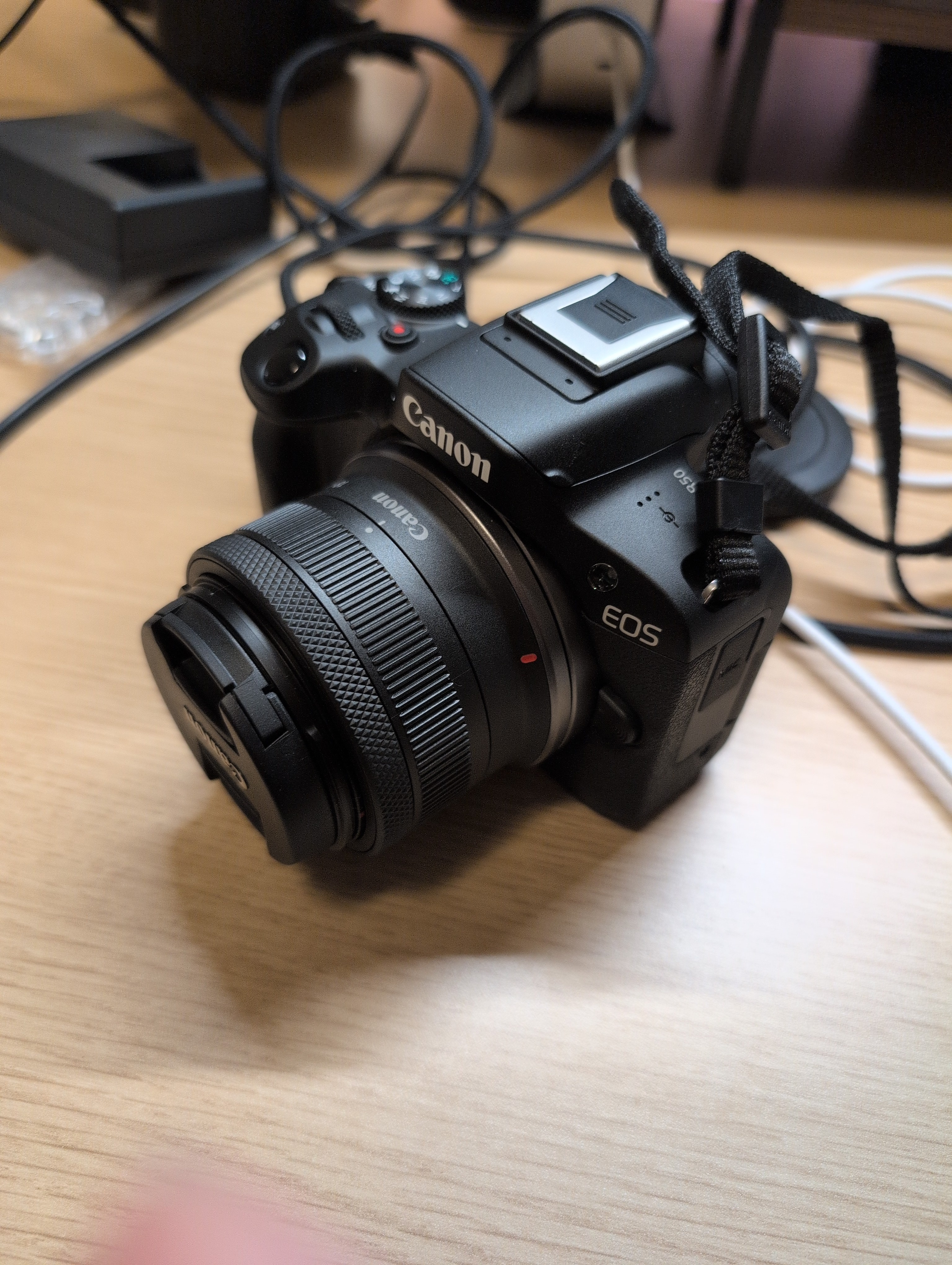
I guess I'll find out how far this little body can go in future shots.
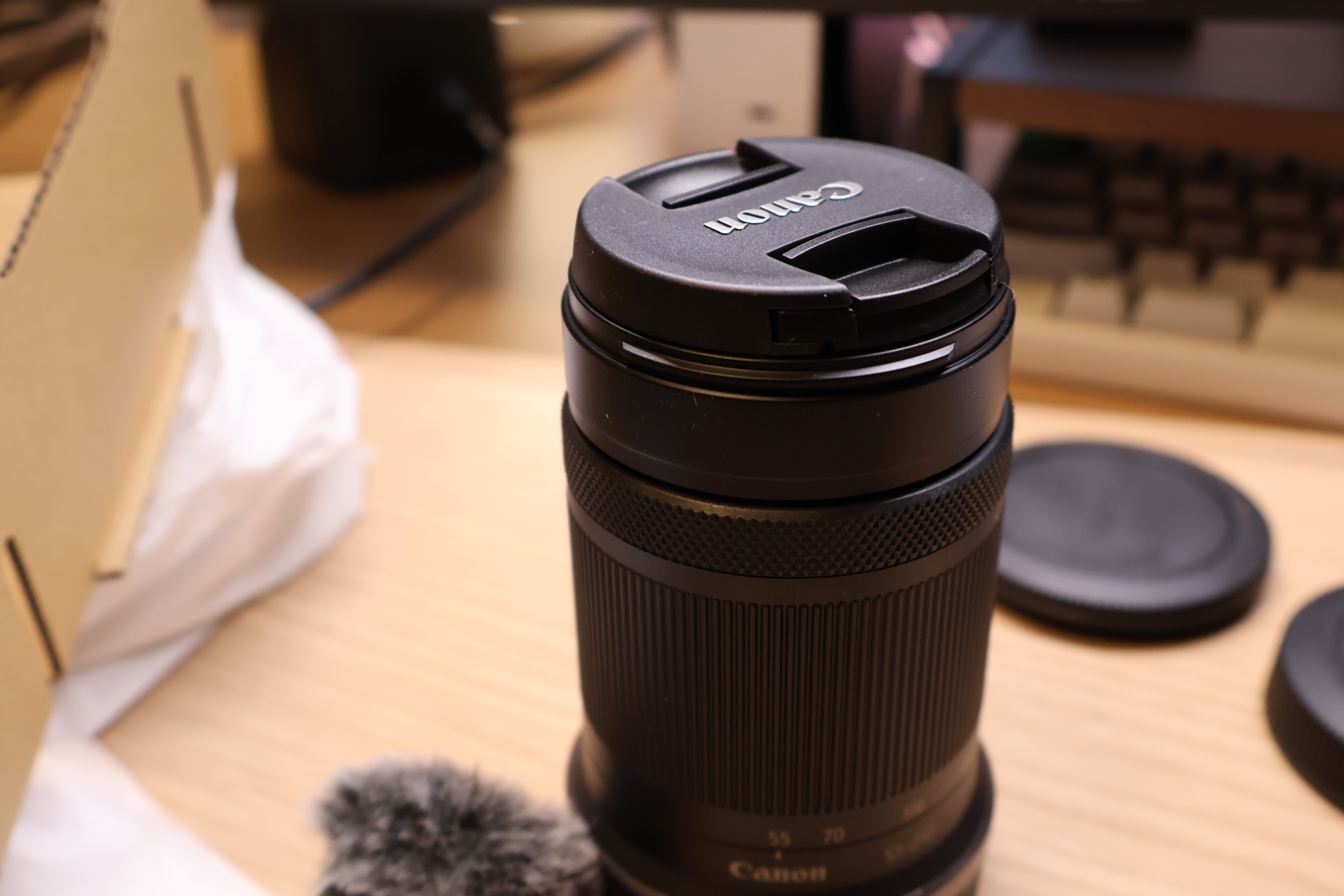
My memorable first shot (technically I took three earlier but they were erased when I formatted the SD card).
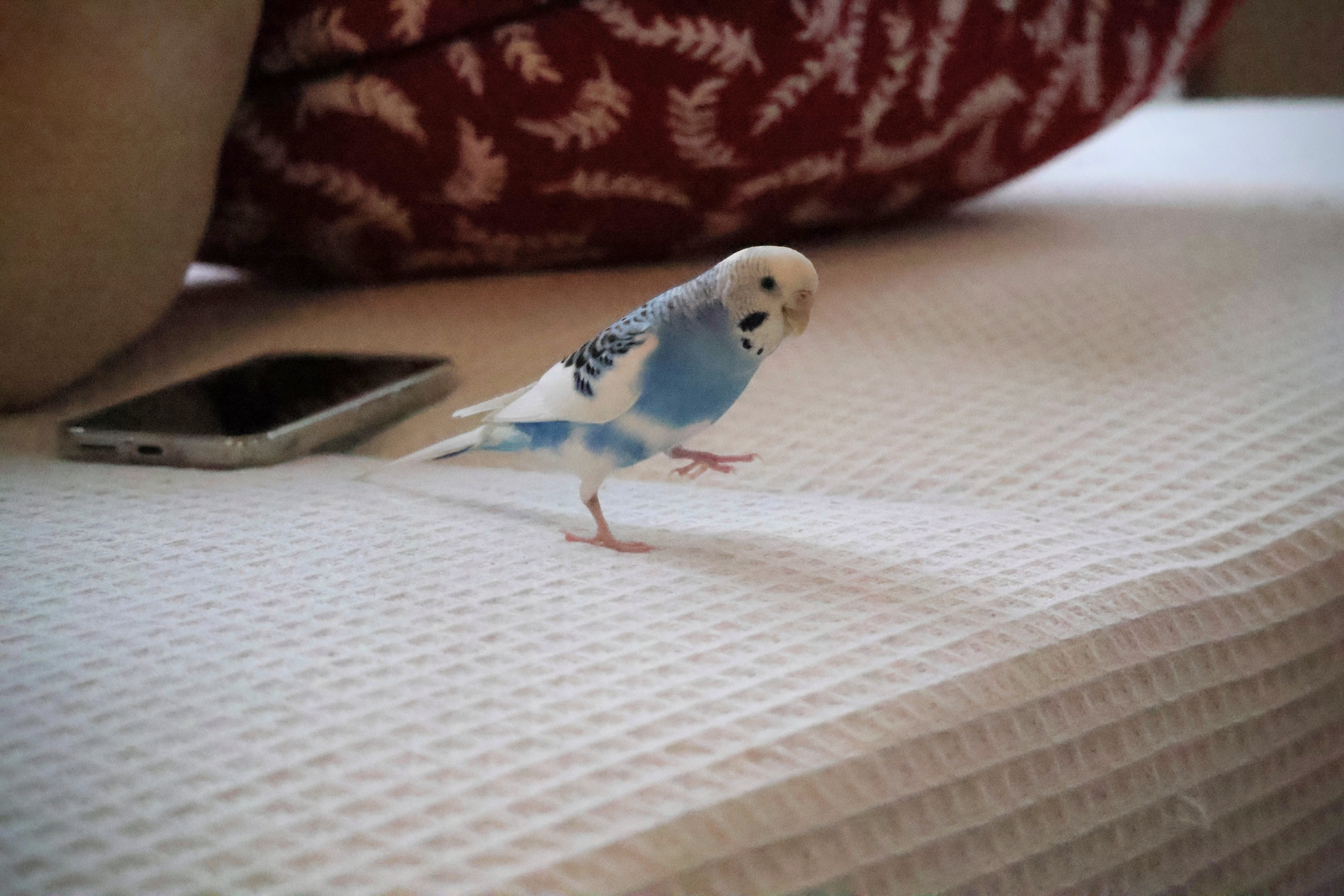
A parakeet running around on a dim, rainy morning. f5.0, 1/1600s, 55.00mm, ISO20000. There's not as much noise as I expected. The parakeet moves pretty fast (sometimes about a human walking speed), so you need a very high shutter speed to capture it.
I bought this camera, but I don't know yet what will come of it. Still, purchases like this are fun, aren't they!
0 people clapped 0 times
Related articles
❓An Era Where It's Hard to Learn from Side Effects
An Era Where It's Hard to Learn from Side Effects
If you came to learn something and found something interesting, and while investigating it you gradually gained new abilities... That's how I've increased my skills so far. But how will AI change that, and how should we design society so those losses don't occur?
🤖Reflections on Mitou Junior
Reflections on Mitou Junior
Reflections on Mitou Junior This article is part of the Mitou Junior Advent Calendar. Long time no see — I'm Soumame (https://tokumaru.work/ja). I attended an A
▲On My Birthday: Reflections Since Completing Mitou Junior
On My Birthday: Reflections Since Completing Mitou Junior
I'm Sosei Tokumaru, a Mitou Junior 2024 Super Creator who just turned 19. Since it might look like I've been quiet online after finishing Mitou Junior, I thought I'd share a public update on what I've been up to, as far as I'm able to.