【Foreign License Conversion】I Converted My Malaysian Driver's License to a Japanese One
【Foreign License Conversion】I Converted My Malaysian Driver’s License to a Japanese One

Hello, I’m Soumame, 18 years old. I lived in Malaysia for about five years, and at the end of January I returned to Japan. I converted my foreign license into a Japanese license and was able to drive in Japan, so I’m writing about my experience here.
As of March 2025, applications for converting foreign licenses have increased, and rules for foreign license conversion may have changed. Please check the Metropolitan Police Department and your prefectural police pages for the latest information. The information on this page is based on my personal perspective. If you think there are any mistakes, I would appreciate it if you could let me know.
Introduction
What is foreign license conversion?
In simple terms, it’s a system that allows you to convert a driver’s license obtained abroad into a Japanese license. Similar systems exist worldwide.
As of March 2025 in Japan, there are three methods for foreign license conversion: countries that are exempt from knowledge and skills confirmation (29 countries, etc.), countries that are exempt from skills confirmation, and other countries.

About eligible countries
Basically, licenses from most countries can be converted, but for some countries all tests are exempt. Most of these are Western countries such as the U.S., Europe, Australia, etc., while countries in Asia and Africa often require tests (both written and practical).
Malaysia, where I was, is not an exempt country, so I had to take all the tests. I’m not sure what criteria are used to decide this, but Asian countries like Malaysia often have higher accident rates than Western countries (in my opinion Malaysia is quite dangerous…), so it seems additional tests are required.
My case (Malaysia)
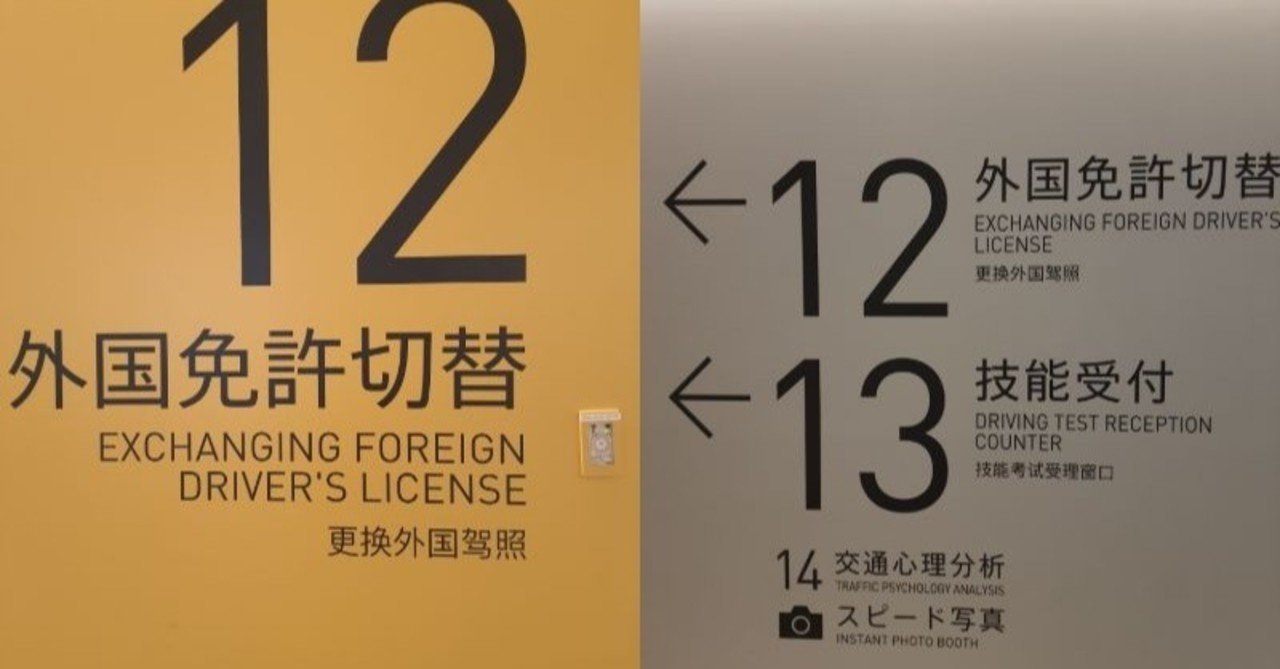
I obtained my license in Malaysia when I was 17, then returned to Japan at 18 and converted/took a license there.
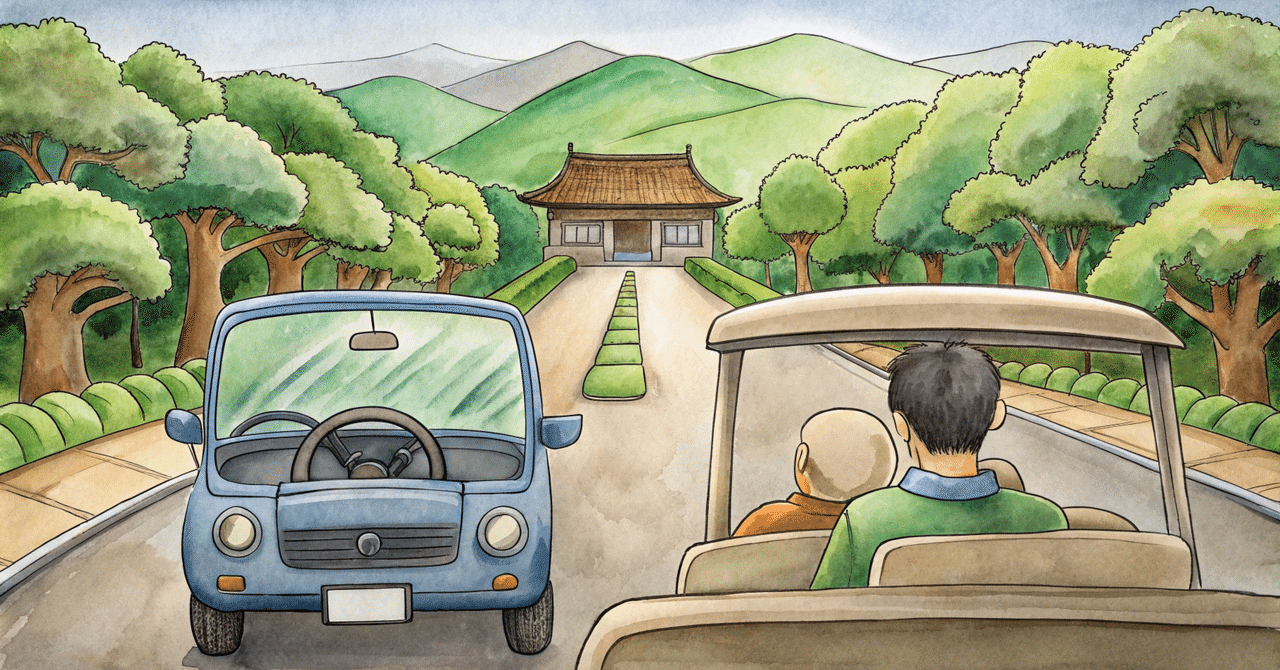
Details omitted, but in Malaysia it’s relatively easy and cheap to get a license, so converting that in Japan felt like a cost-effective way to obtain a license. Depending on the driving school, licenses in Malaysia can be obtained for around 40,000–60,000 JPY, which is a bargain compared to the roughly 300,000 JPY it can cost in Japan. Due to safety concerns mentioned later, I can’t universally recommend it, but getting a license while studying abroad was a very interesting experience.
What if you already had a Japanese license (but it expired)?
If you originally had a Japanese license and it expired while you were abroad, it seems you can reinstate it with only a simple check regardless of the country. I don’t cover that in this article, so here’s another article instead:
Can’t I just drive with an international license?
Another option for driving in Japan using a foreign license is an International Driving Permit. This is intended for short-term stays (about one year or so), and travelers visiting Japan for tourism should use this. You don’t need to go to a license center, so generally that’s the right choice. However, in my case I was treated as a novice in Malaysia (P license), so I couldn’t obtain an international driving permit.
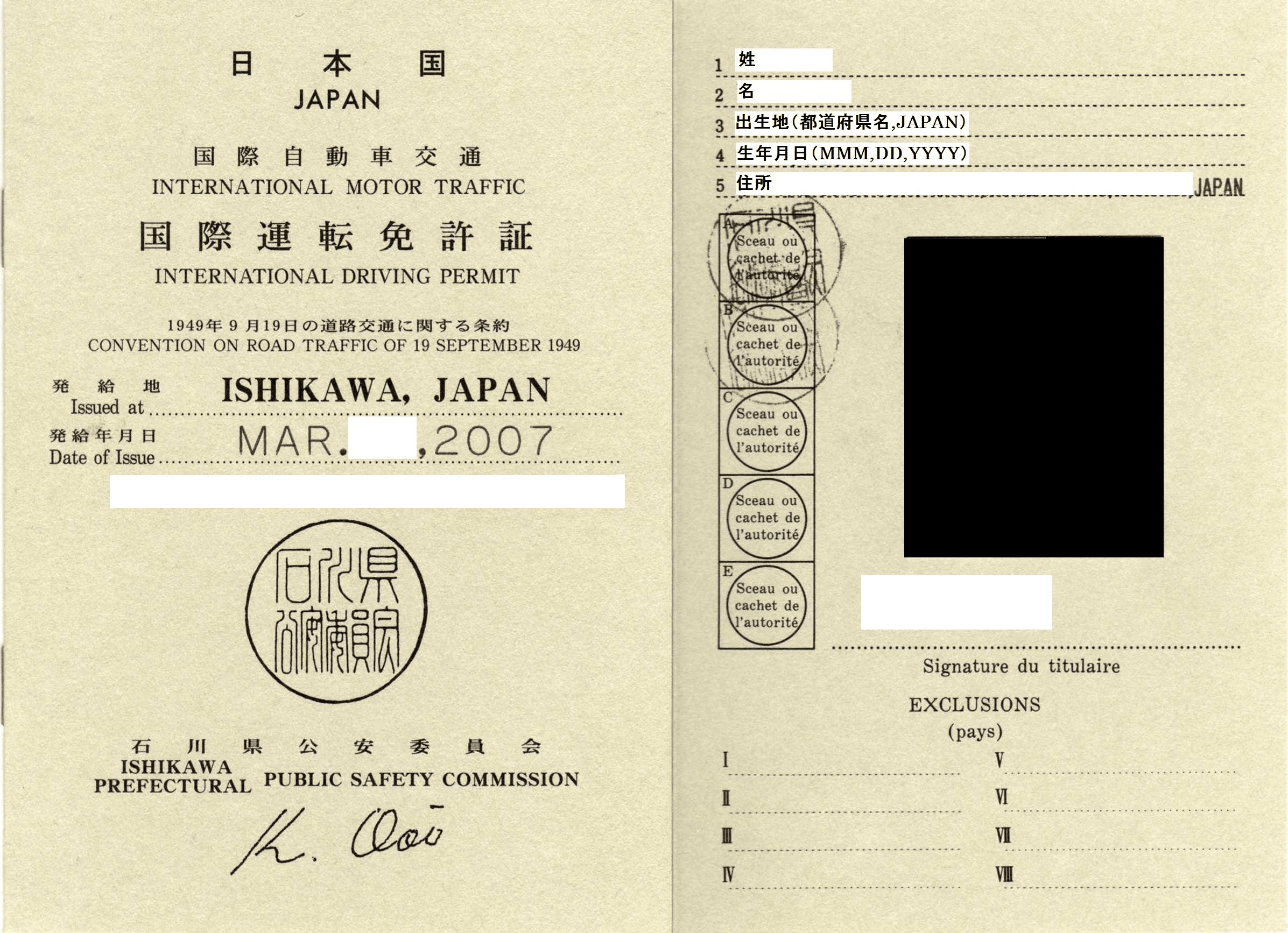
Foreign license conversion is intended for people living in Japan who will drive here. There are reports of tourists taking it for fun, but if you only want to drive, I recommend using an international license… (though I understand wanting a Japanese license too)
Document preparation
I started preparing for the conversion before returning to Japan. Some documents are difficult to obtain once in Japan, so you need to get them in the country where you obtained the license.
Examples of documents I prepared
Required documents vary greatly depending on the issuing country (check the police website for details). In my case I brought my physical license, a translation of the license, a resident certificate (to confirm registered domicile), health insurance card (to confirm current address), passport (to confirm travel country), diploma, proof of tuition payment, school enrollment certificate and other documents proving I lived in that country (described later), and a driving record.
Translation of the license
Translations of licenses are handled by designated organizations such as JAF and Ziplus. I had JAF create mine, but JAF does not accept applications from overseas (their application site is restricted), only from within Japan, so I had to ask family or friends in Japan to apply on my behalf (maybe possible via VPN, but not guaranteed). If that’s difficult, you’ll need to do it after returning to Japan.
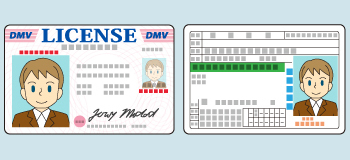

In my case, my family applied and I received the translation by email in about a week. Printing the emailed document at a convenience store produced a document ready for submission to the police.
Proof of stay requires caution
The time since issuance is strictly checked, so you need documents proving you stayed in that country for the specified period (as of 2024, a cumulative 3 months is required).
You might think a passport is enough, but in countries like Malaysia that use automated border gates, stamps are often omitted and you can’t prove your stay. In that case, gather as many relevant supporting documents as possible. I didn’t notice this during preparation until a police officer pointed it out during application.
(In Japan) Passport stamp impressions (entry/exit stamps) on the passport are omitted.**
** If you wish to have a stamp (entry/exit endorsement), after passing through the automated gate, please request it from the examination office staff before boarding the aircraft when departing, and before customs inspection when returning (entry/immigration).**
Pay attention to the driving record
Some countries require a driving record or other documents as additional submissions. In Europe and the U.S. I’m not sure, but in Malaysia a driving record was required. The driving record can only be obtained in Malaysia, so be careful to get it before leaving. In Malaysia, the JPJ (Road Transport Department) issued it after paying a small fee.
Residence card for foreign nationals
Foreign nationals also need to bring a residence card. I saw people without residence cards… in Japan you are required to carry your residence card at all times, and penalties like fines or imprisonment are stipulated for not carrying it, so I wonder what happened in those cases…
Reservation
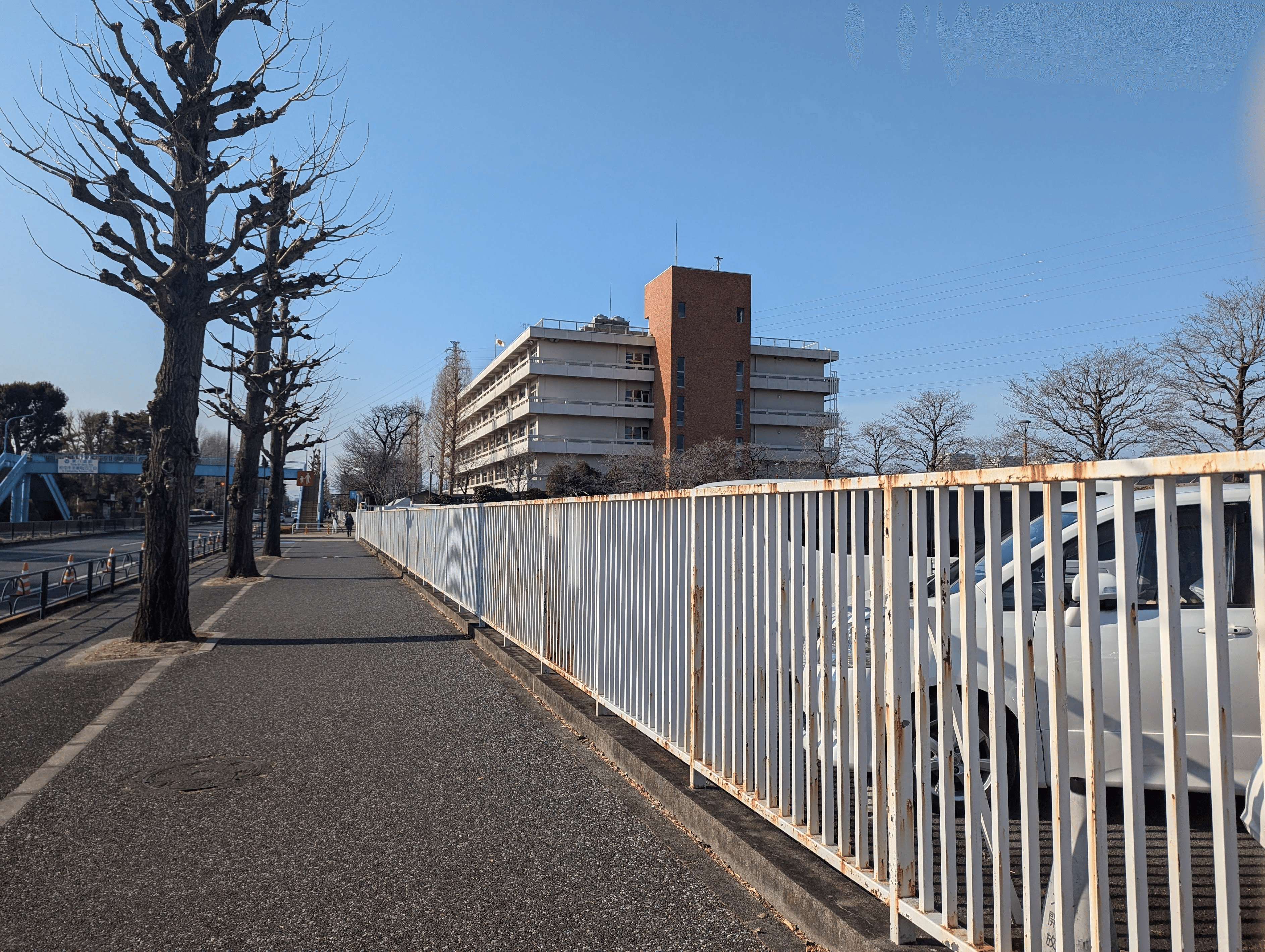
Fuchu Driver’s License Examination Center
After preparing all documents in Malaysia, I started the procedures as soon as I returned to Japan. As mentioned earlier, there are many applicants and the tests take a very long time, so I wanted to take them as early as possible. I’ve heard that in the past there were fewer people and you could even take the test the same day, but that doesn’t seem to be the case now.
Reservations can now be made online (as of March 2025), but when I took the test around January it wasn’t available yet and I had to go to the license center. When I applied, Tokyo residents could use the Fuchu or Samezu centers. It’s pretty tough to stand in line at the center in the cold morning. After waiting about an hour, I successfully got a reservation. But even then I was told there would be a waiting period; I went on January 23, and the earliest written test date I was given was February 21. Long wait.
As of March 2025, reservations can be made online
Also, I was a novice even in Malaysia and probably had the driving skills of a provisional license in Japan (you should never overestimate your driving skills), so I had to be extra careful. A police officer told me, “Study well.”
Written Test
Study by reading the book
To be honest I don’t like reading books, but if you drive a car you need the knowledge.
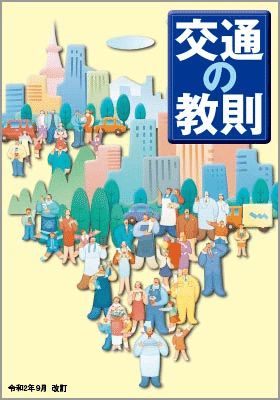

The Japan Traffic Safety Association sells manuals like the traffic instruction manual or driving school textbooks for a small fee (around 100–300 JPY), so I ordered one from them. I had an old version at home, but rules have changed in recent years (for example, regulations for electric kickboards and certain small mopeds have been added), so I got a new one.
Taking the test
I studied hard and went to take the test, and to my surprise the questions were very easy. I had heard the Japanese test was difficult, but the foreign license conversion written test is very simple. It’s a computer test of about 10 questions, with questions like “If a red light has a blue arrow pointing right, is it OK to turn right?” There were no trick questions; it felt like a minimal necessary check. I got a perfect score, and the police officer was like, “Oh, good job,” so if you understand Japanese you’ll almost certainly pass.
Booking the next test
After passing the written test, you book the practical test, and then a miracle happened: I was told I could take the practical test in just two weeks. According to the police, that was very lucky — usually there’s a four-month wait. The practical test is harder than the written test, and many people fail multiple times. Each practical test costs about 2,000 JPY, which is far cheaper than taking a driving school course to obtain a license, so many people retake it and that causes long waiting periods.
Practicing for the practical test
With only two weeks until the test, I started practicing, but encountered a problem: there was nowhere to practice. I wasn’t attending a driving school and didn’t have a large private area, so the only place to practice was a rented course. However, in Tokyo there are almost no rental courses available to the general public, especially those without a license.
I want to practice at the license center!
That left the license center’s course openings (the police sometimes open the course on weekends) as the only practical option in Tokyo, so I urgently called the license center.
But no one answered! Everyone had the same idea, so the phone never connected. It seems even small driving schools that don’t have courses of their own use these facilities, so just getting a reservation is tough.
After calling for about an hour I finally got through. They said you can practice if you bring a private car and an instructor (someone who has held a license for more than three years). I had a car at home (within the permitted size) and family members with licenses, so I met the conditions. Fortunately, I was able to reserve a practice session before the practical test.
Differences from Malaysia
Compared to Malaysia, the roads are much narrower. Intersections also operate a bit differently, which takes time to get used to. Even on large streets, you must always consider bicycles and pedestrians (which aren’t as common in Malaysia), and the traffic system itself is different. Since Malaysia is left-hand traffic like Japan, it wasn’t too jarring for me, but it might be tougher for people from right-hand traffic countries.
Also, in Malaysia cars break down a lot, so people often check engine oil, brake fluid, drive belt deflection, body dents, and lights before driving. In Japan, people don’t do that as much — perhaps due to the vehicle inspection system.
Practice content
I practiced with my father driving along. Many foreign people were present at the venue, so it seems places to practice for foreign license conversion are limited. I had little driving experience even in Malaysia and wasn’t sure I could pass, so I practiced crank turns and S-curves endlessly.
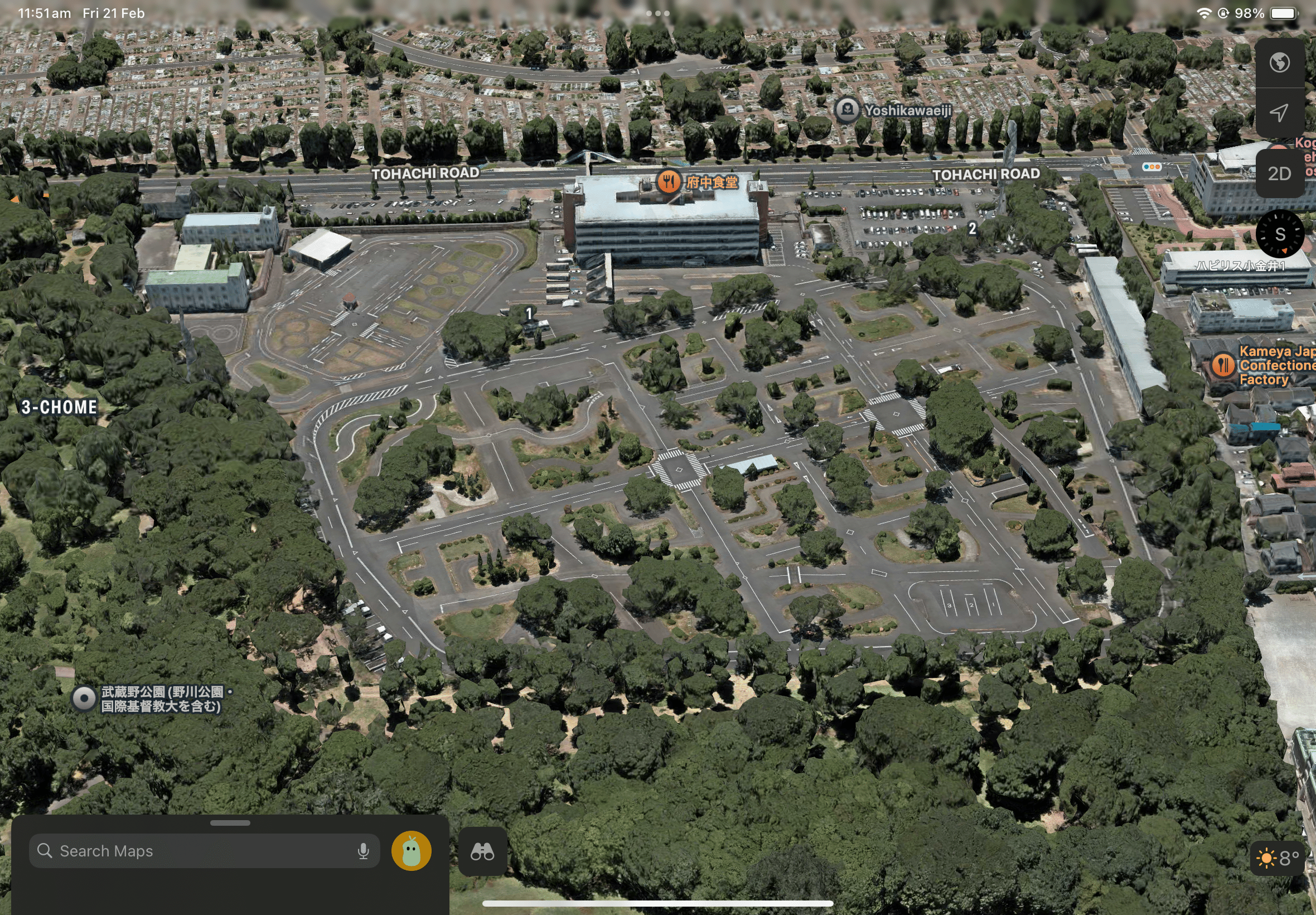
Used satellite images to learn the course in advance
I was careful but once clipped a small branch of a potted plant and made a small scratch on the car. Sorry, Dad.
Practice time was short — about an hour — and that turned out to be my first and last practice. It seems unrealistic to expect a mostly non-driving person to pass Japan’s difficult practical test with only an hour of practice…
Practical Test
Content and difficulty
As of March 2025, the practical test consisted of a lap around the license center course (about 1,200 meters), including crank turns and S-curves. Hill starts, railroad crossings, and multi-point turns seemed to be omitted. Perhaps those are universally tested elsewhere and therefore excluded here (in Malaysia there are few railways and hardly any crossings, so I didn’t practice them).
I haven’t taken the normal Japanese license test, so I can’t compare difficulty, but it was quite strict: the examiners ride along and scoring uses the same criteria as an on-the-spot test. Still, the content is almost at the provisional license level, so it may not be extremely hard; beginners can pass with proper practice. Having a JPJ officer from Malaysia ride beside me was less intimidating than the Japanese examiners. They weren’t overly intimidating, but their gaze was strict.
I felt like attitude might even be part of the evaluation, so I bowed repeatedly the whole time ()
They’re busy administering tests to dozens of people; it must be a very hard job…
How the test went
The test was conducted using about four vehicles. Eating, drinking, and mobile phone use were prohibited during the test, so be careful.
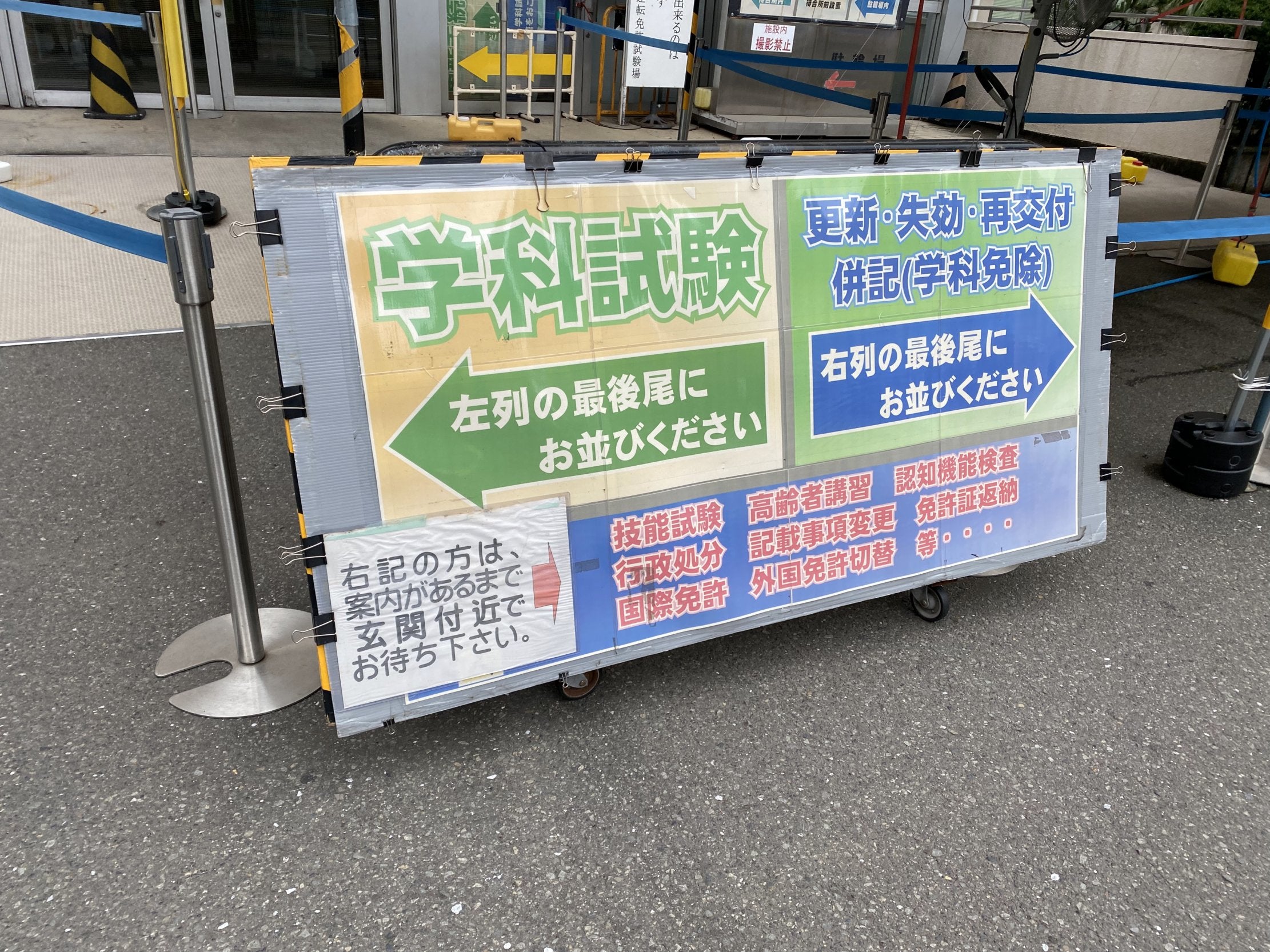
Someone who took the test about two years ago said there were only two vehicles then, so the number of applicants has increased.
Three people — the examinee, the examiner, and the next examinee — ride in the car and drive the course. The course varies by day and the examiner gives instructions on the spot. If you understand Japanese, it’s not that difficult.
I failed the test
About a week after practicing, I took my first practical test.
I failed. First, I drove my wheel onto the curb at the crank section (this didn’t seem to be a deduction itself?), and when reversing afterward I failed to check the rear by direct visual confirmation, which resulted in deductions. Additionally, I was penalized for not properly checking left and right when entering an intersection, so my total score fell below the passing mark. The examiner said, “So close — just a bit more. If you remember this, you’ll pass next time!” but I was so shocked I lost motivation. I’d never mounted a curb at a crank before…
I was nervous, but I realized my fundamental driving skills were lacking. The test fee is only about 2,000 JPY, so I decided to pull myself together and make another reservation.
Book the next test immediately after failing
When I failed, I was told the next available slot would be about four months later due to congestion, so I thought June or so. But by luck I got a slot the next week — there was a sudden opening. However, with the test the next week I had no time to practice. After debating, I decided to keep retaking it since the fee was only 2,000 JPY per attempt. If I was careful about the feel of the car I should pass next time… hopefully!
I was lucky to get a quick retake, but normally if you fail you must wait a long time and that’s annoying. I’ve heard some people fail repeatedly; do they keep taking the test for years in such cases? 🤔
Passed on the second attempt
I knew why I was penalized last time, so I just had to be careful about those points. With no practice opportunities, I read my notes and mentally rehearsed. If I controlled the vehicle well and didn’t mess up the crank, I thought I could pass.
This time I passed. I felt relieved more than happy. The police officer said I did well, so reviewing the previous mistakes paid off.
License issuance
The issuance process is probably similar to obtaining a license within Japan.
Don’t drive hands-free
After passing the tests, you pay fees at the reception and receive the license at the designated pickup time once it’s ready. Basically it’s issued the same day. For foreign nationals, the nationality is recorded in the domicile field, while Japanese citizens with registered domiciles will have their usual domicile recorded. The license itself is identical to a Japanese one.
As a novice driver, I was required to display the wakaba (beginner) mark on my car.
Practice after issuance
Even though I got the license, the environment is very different from driving in Malaysia, and I felt I still had the car-feel of a Japanese provisional license. My parents seemed to agree, so for two to three weeks after obtaining the license I practiced driving with a parent in the passenger seat.

Family drive
Practicing vehicle awareness
I live in Setagaya Ward, which has many very narrow roads scarred with countless marks on utility poles. Around my house there are roads that only just fit a compact car, and places where you can only pass in specific places (roads that should be one-way but allow two-way traffic). My parents taught me how to drive in such places. On narrow roads that only locals use, you must remember who has priority or you can’t pass smoothly. Seriously, the roads are way too narrow!
Checking the surroundings
In Japan, checking your surroundings is absolutely essential. Despite Japan’s roads often being narrow compared to Malaysia, bicycles, motorcycles, and sometimes kickboards appear from all directions. Especially children and people without licenses riding bicycles or kickboards may enter the roadway without checking left, right, or behind, which is nerve-wracking. Also, since there is little roadside parking, you need to be careful when stopping to drop someone off or when pulling away. Once after I stopped and dropped off my family, I tried to start again without checking a car that was passing on my right-rear and nearly collided with it — that was scary. Neglecting to check blind spots behind you causes accidents, so I always make a point of checking directly by turning my head as well as using mirrors, and I practiced this on the course. But the amount of information on actual roads is overwhelming compared to the course, and it’s easy to forget if you let your guard down. Direct visual checks of blind spots are important, not just mirror checks.
Insurance
Also, don’t forget to review your car insurance. My parents’ car was insured only for the owner and spouse, so we needed to change the plan to allow the whole family to drive and specifically include drivers under 20. Drivers under 20 have relatively higher accident rates, so insurance premiums go up a lot — be prepared. You can see how much it increases using a premium simulation.
My personal thoughts on foreign license conversion
So I converted a license obtained overseas into a Japanese one, and I’ve been driving nervously ever since. There’s criticism online about foreigners driving, and since I’m practically a foreigner myself I’m not in a position to complain about the licensing system. Oh, by the way, voting rights are from 18, so I’m involved too and it’s okay for me to voice opinions on Japan’s system.
I think the current system can stay, but I hope people don’t get licenses for the wrong reasons
I didn’t see many cases, but online news says some people obtain licenses despite only temporary stays. I don’t know how true that is, but if you just want to drive, an international driving permit suffices, and those taking the conversion for fun make it harder for people who urgently need it.
I live in Japan permanently, so it was fine for me, but some people come to Japan on one-way tickets to work and get a license. Such people have limited chances to take the test (if you fail once you might have to wait months), so please don’t take it lightly.
I understand why people say foreigners are dangerous
Some say, “Don’t let foreigners drive! It’s dangerous!” and I can understand that. I had little driving experience when I obtained the license and for a while my parents sat in the passenger seat. They said my driving at the time of obtaining the license was at provisional level or like someone who had just left a driving school. (Now I’m allowed to drive alone so I’ve improved a bit.)

We had an accident!
In Malaysia, you can get a license after only 16 hours of instruction, so many drivers lack proper skills. The accident rate is also very high. It must be hard for people from such countries to adapt quickly to Japan’s road environment.
If you think of them as provisional-level drivers in Japan, it’s understandable why they’re considered dangerous. But saying “foreigners cause many accidents! Dangerous!” doesn’t mean foreigners make up a large share of overall accidents in Japan; it probably means that drivers who have just arrived in Japan have several times the accident rate of locals. So it’s complicated.
For now I’ll keep practicing around my neighborhood with someone experienced in the passenger seat.
About the bargain price
This was criticized online. Foreign license conversion is very cheap. Even with retests I paid only around 10,000 JPY in total.
Hearing that, some might think, “We Japanese pay 300,000 JPY but foreigners are being favored! That’s unfair!” I got my license for about 60,000 JPY in total.
However, Japan also offers the so-called “one-shot exam” which is cheaper if you pass without going to a driving school, so I don’t think foreigners are necessarily favored. Still, it’s odd that the one-shot exam is far more difficult than the driving school route.
Driving school fees include lessons, car rental, instructor wages, and other costs. Comparing those to the foreign conversion test fee and claiming foreigners are favored seems nonsensical.
In Malaysia, instruction lasts only 16 hours and wages are low, so a license could be obtained for around 60,000 JPY. I found that in 2023 there were about 600,000 traffic accidents in Malaysia… what?? For a population of 35 million people??? In a country where minor accidents are often settled privately and not reported to the police??? That means about 1.7% of people cause a police-reportable accident in a year (minor contacts are often settled without reporting), by my rough calculation.
The Royal Malaysia Police Traffic Investigation and Enforcement Department announced on January 1 that the number of traffic accidents last year reached 598,653 as of December 30.
Malaysia likely differs significantly between cities and rural areas, so this may not be an exact comparison, but Japan, with a population of 120 million, had about 307,930 accidents last year including minor injuries, which is about 0.3%.
Number of incidents: 307,930 — Year-on-year +7,091 (2.4%)
Considering this, I might have obtained my license at the cost of my life. Driving in Malaysia with only 16 hours of training in a country with an accident rate much higher than Japan feels risky.
Conclusion
I ended up shivering at how dangerous Malaysian road traffic is, but overall it was a valuable experience. A car is a familiar thing, but it’s a huge chunk of metal and the responsibility of operating it is heavy. For those obtaining or converting a license, please prioritize safety when taking on the challenge.
Whoa! A car coming from the front!!! ()
0 people clapped 0 times
Related articles
💩 Looking Back Only at the Failures of 2024!
Looking Back Only at the Failures of 2024!
Looking Back Only at the Failures of 2024!
🤖 [ATO2] List of the Most Important Early-Game Cities (Updating)
[ATO2] List of the Most Important Early-Game Cities (Updating)
I created a list of cities you should secure in the early game. Please take a look if you'd like....
🧱 I Presented at Minecraft Cup 2025
I Presented at Minecraft Cup 2025
I had the opportunity to speak at Minecraft Cup, which is one of the elements that shaped who I am today. There were many things I didn't get to say, so I'll cover those as well in this blog post.